

Walk into almost any gym, and you’ll see people working hard to become stronger. They’re squatting, pressing, deadlifting, counting calories, tracking protein intake, and chasing progressive overload. And that’s a good thing. Building strength and muscle can improve health, performance, confidence, and quality of life.
However, after years of working with athletes and recreational lifters, I’ve noticed something interesting. Many people are getting stronger, many are building impressive physiques, yet fewer and fewer seem capable of moving athletically.
Before reading any further, ask yourself a few questions:
- When was the last time you jumped as high as you possibly could?
- When was the last time you sprinted at full speed?
- When was the last time you threw something as far as you could?
- When was the last time you deliberately practiced moving fast?
For many gym-goers, the answer is probably, “I can’t remember.”
And that’s worth thinking about.
In this Muscle & Motion blog, we’ll explore why getting stronger and building more muscle doesn’t always make you more athletic, and why explosive movement may be the missing piece in many training programs.

Strength is not the same as athleticism
Strength is one of the most important physical qualities we can develop. In fact, it serves as the foundation for many aspects of athletic performance. But strength and athleticism are not the same thing.
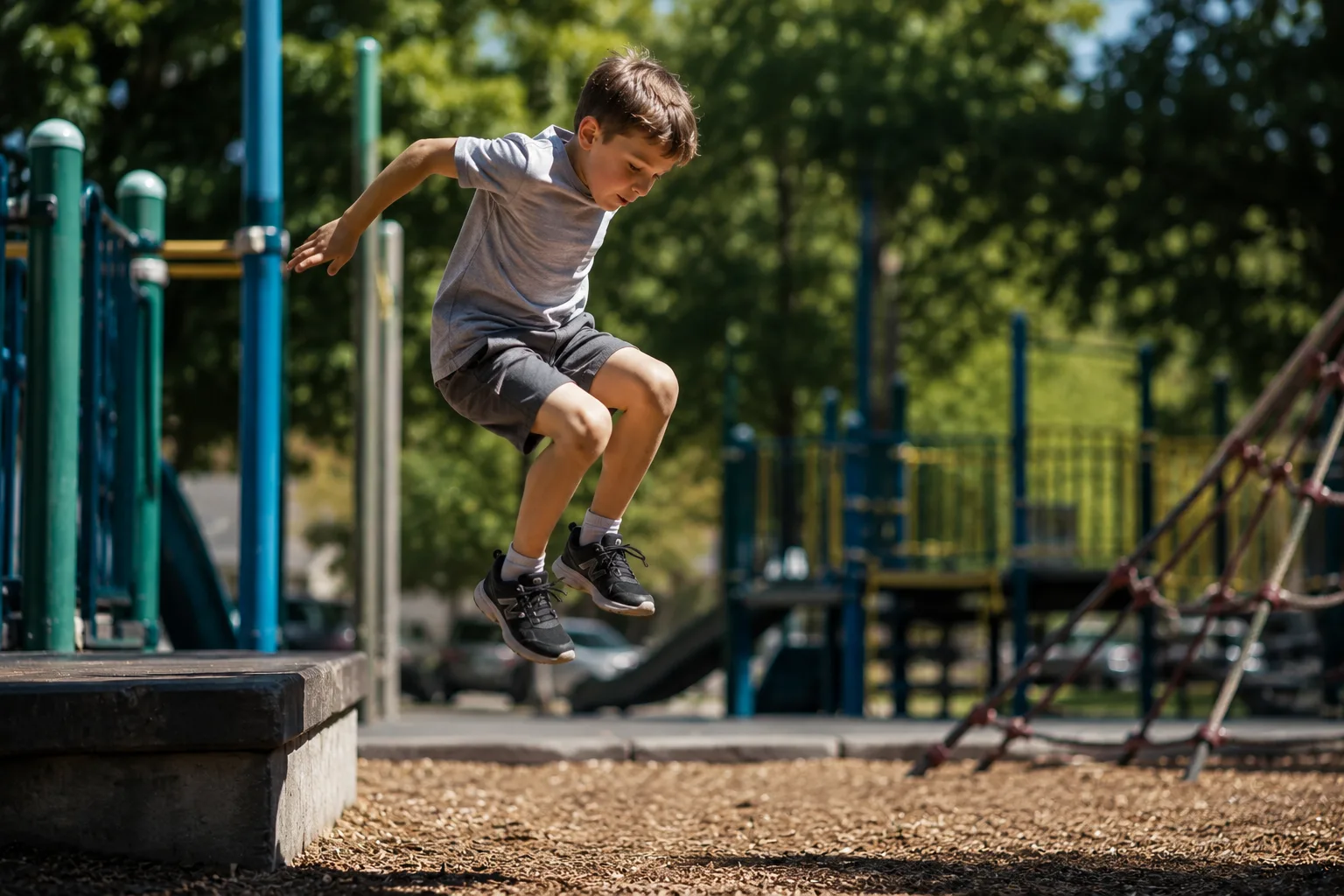
Think about a child on a playground. That child probably can’t squat 100 kilograms, doesn’t have large muscles, and certainly isn’t following a structured training program. Yet they run, jump, climb, change direction, and move with remarkable freedom and confidence.
Now think about some adults who train consistently in the gym. They’re significantly stronger and more muscular, yet many haven’t sprinted, jumped, or moved explosively in years. Some can perform impressive lifts but struggle with movements that require speed, coordination, or rapid force production.
This isn’t a criticism. It’s simply the result of adaptation. The body becomes good at what it repeatedly practices.
The principle of specificity: You become what you practice
One of the most important principles in exercise science is specificity. The body adapts to the demands placed upon it.
If you spend years practicing squats, you’ll become better at squatting. If you spend years bench pressing, you’ll become better at bench pressing. If your training consists primarily of controlled repetitions, machines, and traditional strength exercises, your body will become highly adapted to those specific tasks.
But here’s the important question: are those the qualities you actually want to develop?
Most people don’t train to become world-class squatters or machine users. They train to become stronger, healthier, more capable, and more resilient.
The problem is that many programs focus almost exclusively on strength and muscle development while neglecting other physical qualities that contribute to athletic movement.
As the saying goes, you don’t rise to the level of your goals. You fall to the level of your training.
What does it actually mean to be athletic?
Athleticism isn’t a single quality. It’s a combination of physical capacities that work together: the ability to generate force, transfer it efficiently through the body, and express it rapidly in movement.
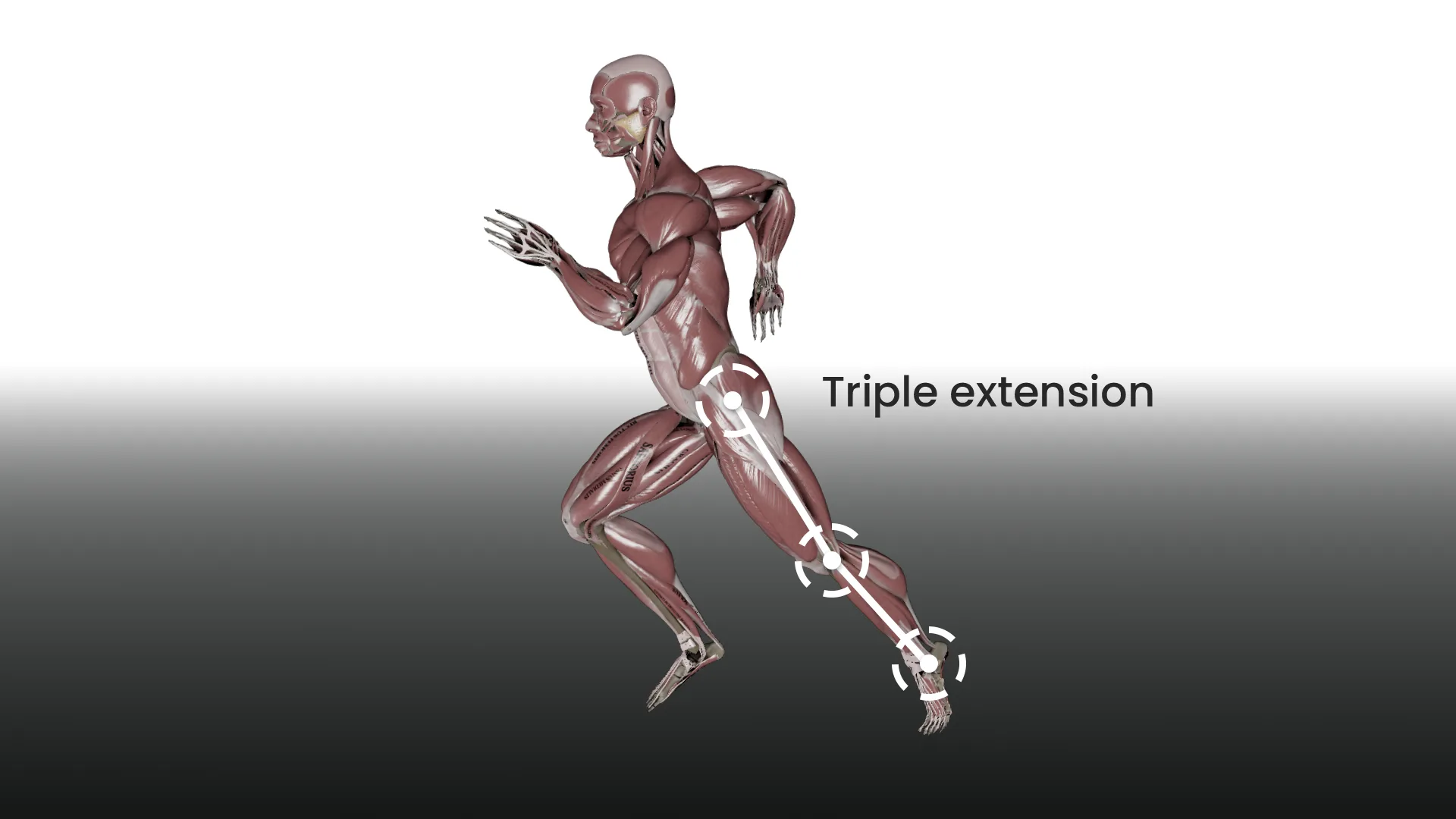
At the center of almost every explosive athletic action is a mechanism called triple extension, the simultaneous, coordinated extension of the hips, knees, and ankles. It’s the engine behind sprinting, jumping, throwing, and change of direction. When a sprinter drives off the blocks, when a basketball player explodes toward the rim, when a soccer player strikes the ball with full power, triple extension is at work.
And here’s what’s worth understanding: most traditional gym training never touches it.
The gap that strength training leaves
When you perform a leg press, your hips are fixed, your ankles are passive, and the machine provides stability. The muscles work. But the three joint systems never learn to coordinate with each other. You build isolated strength, but not the ability to chain that strength into something explosive.
This isn’t a flaw in strength training. It’s simply what it was designed to do. The problem arises when strength training is all you do, and you expect it to make you more athletic.
A person can develop impressive quadriceps strength on a leg press machine and still struggle to jump, sprint, or absorb force well. Not because their muscles are weak, but because the nervous system was never asked to coordinate them in that way.
It is worth noting that this gap is not exclusive to bodybuilders. Even practitioners of functional fitness and high-intensity metabolic training often display the same deficit. While these programs regularly include dynamic movements such as kettlebell swings, wall balls, and high-repetition box jumps, these exercises are typically performed under extreme metabolic fatigue. When you perform seventy box jumps as fast as possible against a ticking clock, the physiological stimulus shifts entirely from explosive power development to metabolic conditioning.
True power development requires a fully rested, unfatigued central nervous system. Fatigue and explosiveness don’t coexist. That’s the gap. And it’s exactly what explosive training is designed to fill.
The best bang-for-your-buck athletic movement
There are plenty of movements that train triple extension explosively. The barbell clean and barbell snatch are among the best tools we have for developing raw power, and anyone who commits to learning them will benefit enormously over the long term. Pair that with shuttle runs and max-effort jumps, and you’ve covered nearly every athletic quality discussed in this article.
But most people won’t do that. The barbell lifts are technical, the learning curve is real, and for many recreational athletes and gym-goers, that level of commitment simply isn’t practical.
So if you had to pick just one movement, one that trains triple extension, requires minimal coaching, and delivers results quickly, the dumbbell snatch is hard to beat.
The pattern is intuitive: just pull the weight as high as possible off the floor and catch it above your head.
You begin with a hip hinge, loading the posterior chain. From there, you drive explosively through the floor, hips, knees, and ankles, extending in rapid sequence, transferring that force upward through the trunk and into the dumbbell as it accelerates overhead.
In those few seconds, your body is doing something that no machine can replicate. It’s generating force from the ground up, coordinating multiple joint systems simultaneously, and expressing that force at speed. That’s triple extension. That’s athleticism in practice.
The carryover of the dumbbell snatch is significant. Hip power transfers to sprinting. Explosive knee drive transfers to jumping. The ability to rapidly produce and reabsorb force is exactly what the body needs when changing direction at speed. And because the movement demands full-body coordination under load, it also builds the proprioceptive awareness that helps athletes feel more comfortable moving in space.
You don’t need to abandon your current program. Keep squatting, keep pressing, keep building strength. Just add the dumbbell snatch at the start of a session, a few sets with full intent and full recovery, and you’ve introduced a stimulus that most programs simply don’t include.
Final thoughts
Strength matters. Muscle matters. Building both will improve your health, resilience, and physical capacity in countless ways.
But perhaps it’s worth asking yourself one final question: What are you ultimately training for?
If your goal is simply to build bigger muscles, then traditional strength and hypertrophy training may be enough. But if your goal is to build a body that can run, jump, react, accelerate, and move confidently through the real world, then strength alone is only part of the equation.
The strongest athletes in the world are rarely the ones with the biggest muscles. They are the ones who can apply their strength quickly, efficiently, and at the right moment.
So keep lifting. Keep building muscle. Keep getting stronger.
Just don’t forget to move.
Because the goal isn’t simply to build a stronger body.
It’s to build a body that can actually use its strength.
At Muscle and Motion, we believe that knowledge is power, and understanding the ‘why’ behind any exercise is essential for your long-term success.
Let the Strength Training App help you achieve your goals! Sign up for free.